


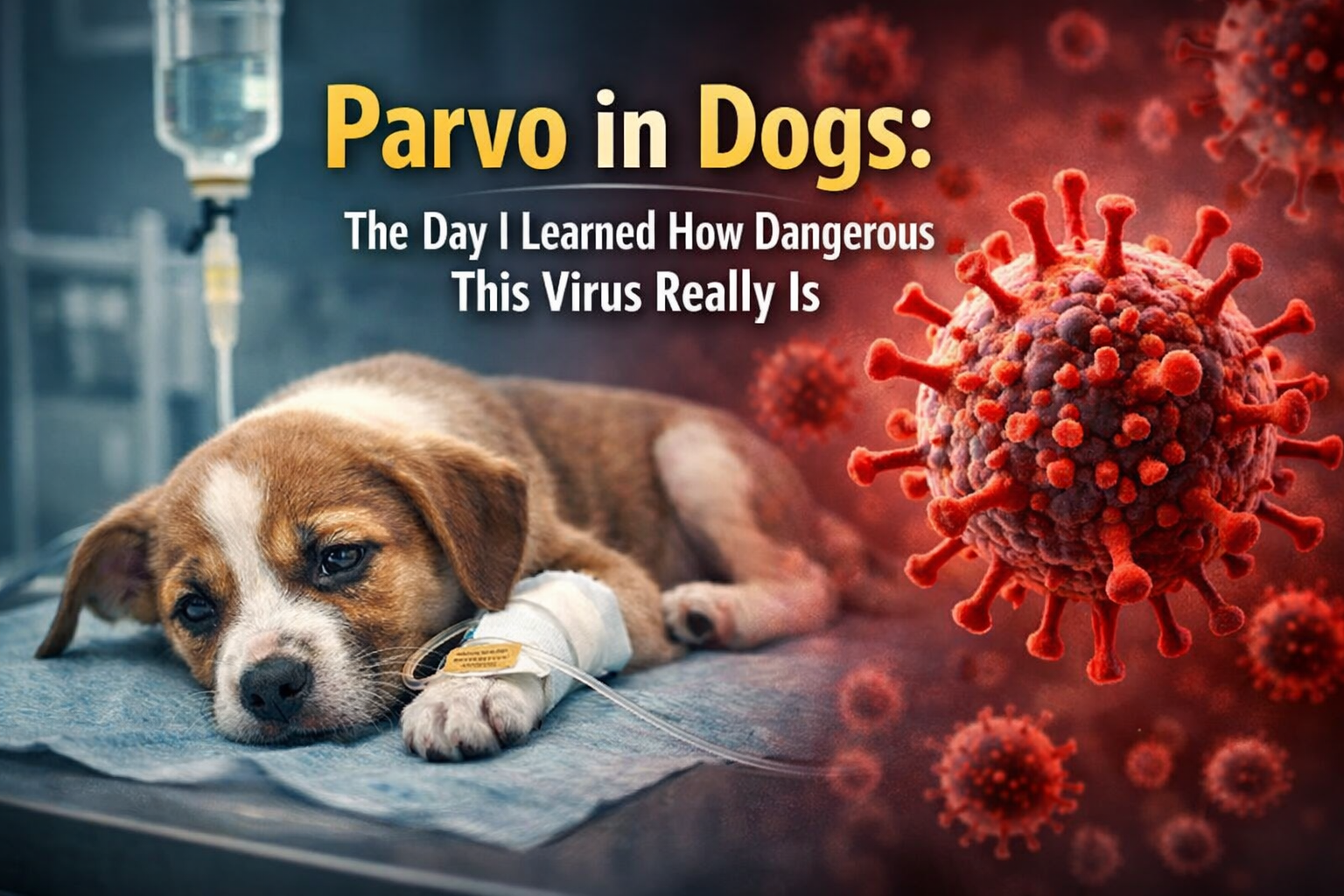
The day started like any other Tuesday, Our Golden Retriever puppy Charlie was running around the house the night before. Chewing shoes, barking at nothing. Acting like the healthy, unstoppable puppy we had brought home just weeks ago.
By the next morning, he wouldn’t get up.
That was the day I learned what parvo in dogs really means —and how fast it can turn a normal day into a nightmare.
Like many dog owners, I had heard the word “parvo” before. But I didn’t truly understand what is parvo in dogs, how dangerous it is, or how silently it can enter your home. I thought vaccines could wait. I thought a little vomiting wasn’t serious but I was wrong.
This is not just an informative article. This is a real story and one I wish I had read earlier.
The First Signs I Almost Ignored
It started small.
He skipped breakfast. I thought maybe he was being picky. Then came mild vomiting once, maybe twice. I Googled quickly and convinced myself it was something he ate.
Looking back now, these were the early signs of parvo.
At the time, I didn’t connect the dots:
- Slight lethargy
- Loss of appetite
- A puppy who suddenly wanted to sleep more than play
These are common parvo symptoms, but they are easy to dismiss, especially for first-time dog owners.
I told myself, “Let’s just wait and see.”
That delay almost cost his life.
When Things Got Worse Overnight?
By nightfall, the situation changed drastically.
He began vomiting repeatedly. The smell was strong and unnatural what I later learned many vets refer to as parvo vomit. Then came diarrhea. Watery at first. Then bloody.
These are classic parvo signs and symptoms, but when you’re living it, panic takes over logic.
I didn’t sleep that night. I sat beside him, watching his chest rise and fall, feeling helpless as his body weakened hour by hour.
By morning, I knew this wasn’t just an upset stomach. These were severe signs and symptoms of parvo in dogs and we needed help immediately.
The Vet Visit That Changed Everything
The vet didn’t take long to suspect the diagnosis.
A quick test confirmed it is the parvo virus in my dog.
Hearing those words felt like the ground disappeared beneath my feet. The vet explained that parvo disease in dogs attacks the digestive system and immune system aggressively, especially in puppies.
He said something I’ll never forget:
“Parvo doesn’t give you time. Every hour matters.”
This wasn’t just an illness. This was a race.
How Do Dogs Get Parvo? (What the Vet Explained to Me)
I asked the question every dog owner asks next:
How do dogs get parvo?
The answer shocked me.
Parvo doesn’t require direct contact with a sick dog. It can live for months in soil, on shoes, floors, dog parks, sidewalks — almost anywhere.
The vet explained:
- Where does parvo come from? Infected feces and contaminated environments
- What causes parvo in dogs? Exposure to the virus combined with low or no immunity
- How does a dog get parvo? Simply walking where another infected dog once walked
That meant my puppy didn’t need to meet a sick dog. The virus likely came home with us.
Why Puppies Are at the Highest Risk
Puppies are especially vulnerable, and now I understand why.
How do puppies get parvo?
They explore everything with their mouths. Their immune systems are still developing. And if their vaccination schedule isn’t complete, they are defenseless.
The signs and symptoms of parvo in puppies progress faster and hit harder:
- Severe dehydration
- Rapid weight loss
- Weak immune response
This is why parvo disease symptoms in puppies are often fatal without fast treatment.
“Will My Dog Survive?” — The Question No Owner Is Ready to Ask
At some point, every pet parent facing parvo asks the same terrifying question:
What’s the chance of a dog dying from parvo?
The vet answered honestly.
Without treatment, mortality rates are extremely high. With early and aggressive care, the parvo in dogs survival rate improves significantly — often above 80–90%.
But survival depends on:
- How early treatment starts
- The dog’s age
- Overall health and hydration
That’s when we made the decision to hospitalize him immediately.
Treatment Isn’t Simple — There’s No Magic Cure
One of the hardest truths to accept was this:
There is no instant parvo in dogs cure.
Treatment for parvo in dogs is supportive, not curative. The goal is to keep the dog alive long enough for the immune system to fight back.
Treatment included:
- IV fluids for dehydration
- Anti-vomiting and anti-diarrheal medication
- Antibiotics to prevent secondary infections
- Strict isolation
When people ask how to get rid of parvo, the answer is painful but real: you don’t “get rid of it” overnight. You manage it day by day.
How Long Will Parvo Last? Waiting Day by Day
Those days felt endless.
If you’re wondering how long will parvo last, the most critical period is usually the first 3–7 days after symptoms begin.
Every morning, I waited for the vet’s call:
- Did he vomit overnight?
- Did he keep fluids down?
- Did he show any interest in food?
Progress came slowly. One small improvement at a time.
Vaccines: The Question I Asked Too Late
I asked the vet something I wish I had asked earlier:
Could this have been prevented?
The answer was simple — and painful.
Yes.
The parvo vaccine is one of the most effective protections we have. Proper parvo immunization in dogs dramatically reduces the risk of infection and death.
The parvo virus vaccine for dogs isn’t optional. It’s essential.
Parvo Shots for Puppies: What Every Owner Should Know
I learned more about vaccines in that week than ever before.
Parvo injections for puppies are given in a series:
- First shot around 6–8 weeks
- Boosters every 3–4 weeks
- Final dose around 16 weeks
So, how many parvo shots does a dog need?
Usually 3–4 during puppyhood.
And how often do dogs need parvo shots?
After the initial series, boosters are typically given every 1–3 years, depending on veterinary guidance.
Skipping or delaying parvo shots for puppies leaves a dangerous gap in protection.
Can Vaccinated Dogs Get Parvo?
This question worries many owners.
Can vaccinated dogs get parvo?
Yes — but the risk is much lower.
Vaccines aren’t a 100% guarantee, but they drastically reduce:
- Severity of illness
- Risk of death
In vaccinated dogs, parvo is often milder and more manageable.
Can Adult or Older Dogs Get Parvo Too?
Another common myth shattered during this experience:
Can adult dogs get parvo?
Yes.
Can older dogs get parvo?
Yes — especially if they are unvaccinated or overdue for boosters.
Parvo is not just a puppy disease. Immunity matters at every age.
The Moment He Started Eating Again
On the fifth day, the vet called with a different tone in her voice.
“He ate a little on his own.”
That one sentence brought tears to my eyes.
A few bites of food. A small tail wag. Tiny signs — but they meant hope.
Recovery from parvo disease in dogs is slow, but when improvement begins, it feels like a miracle.
What Parvo Taught Me as a Dog Owner
Parvo taught me lessons I’ll never forget.
It taught me that:
- Waiting can be deadly
- Vaccination is an act of love
- Dogs hide pain until it’s severe
Most of all, it taught me that early action saves lives.
A Final Word on Parvo in Dogs
Early symptoms such as vomiting, lethargy, and loss of appetite require immediate attention. Puppies must receive parvo vaccinations according to schedule. If booster status is unclear, a veterinarian can guide you. Parvo is aggressive and fast-spreading but it is also preventable.
Also read this article: Can You Get Arrested for Killing a Dog?
